

Grow Asia Participates in International Trade and Sustainable Agriculture Symposium
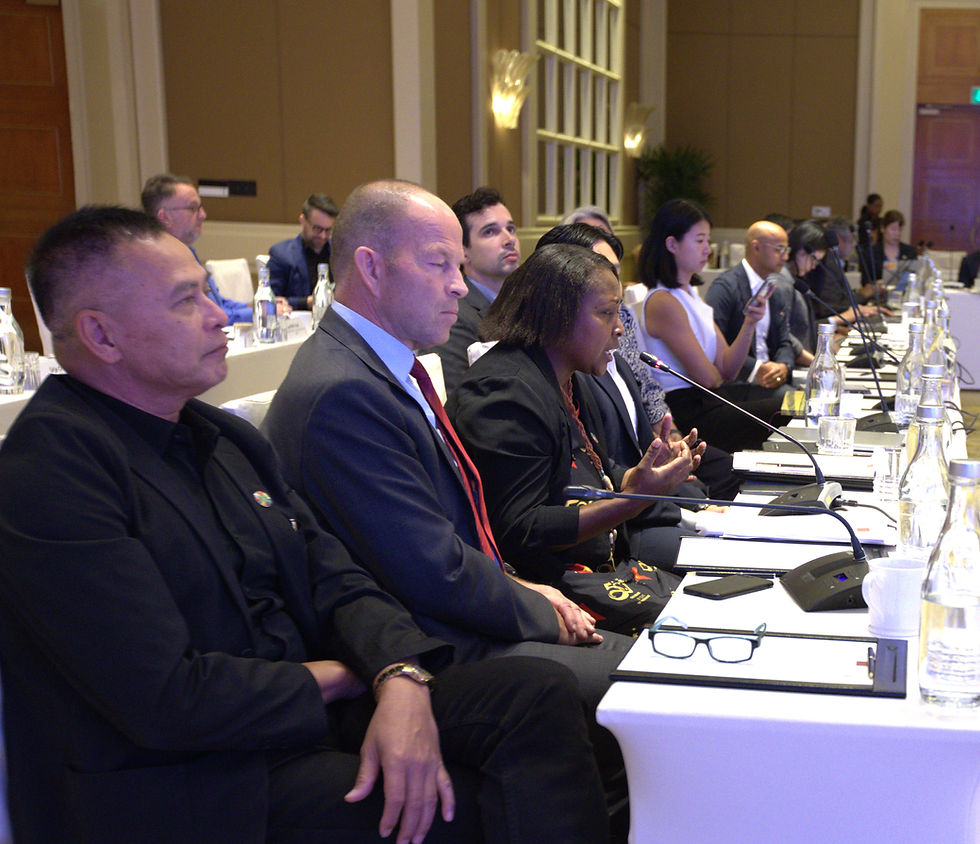
Grow Asia was honoured to participate in the International Trade and Sustainable Agriculture Symposium, co-hosted by the Australian Farm Institute (AFI) and the Department of Agriculture, Fisheries and Forestry (DAFF) in Brisbane, Australia on 4–5 November 2025. The Symposium convened 100 policymakers, researchers, and industry leaders from across the Indo-Pacific to explore how agricultural trade can better align with sustainability objectives to create shared value and long-term resilience.
Discussions centred on three themes:
The role of trade in advancing agricultural sustainability
The importance of collective management and trust-building
The enabling conditions, partnerships, and policy actions needed to scale sustainable productivity practices across the region
A key challenge highlighted was linking local production to trade markets in ways that are sustainable and traceable. Smallholder farmers, often facing high compliance barriers and limited incentives, need stronger policy support connecting local farming systems to global markets while safeguarding sustainability principles.
Grow Asia was represented by Ruthy David, Head of Programs from Grow PNG, on the panel “Shared Challenges: Exploring Agricultural Sustainability Policy Approaches in the Indo-Pacific.” She shared that in Grow Asia, sustainability extends beyond environmental protection to safeguarding livelihoods, identity, and culture, with 85% of PNG’s population depending on agriculture. She highlighted Grow Asia’s approach, balancing productivity with stewardship of land and water, integrating traditional knowledge with modern innovation, and ensuring equitable participation of women and smallholder farmers in market growth. These principles, grounded in PNG, have broader regional relevance, showing that sustainability must reflect economic, social, and political priorities across all Grow Asia Country Chapters.

In response to an audience question on integrating smallholders and women into sustainable trade pathways, Ruthy shared examples from the Grow Asia network:
Indonesia (PISAgro): Value-chain working groups supporting 2.6 million smallholders to adopt improved practices linked to market incentives.
Vietnam (PSAV): Alignment of national standards with export requirements, including pepper sector reforms supporting US$1.3 billion in exports and a target to increase GAP-certified farms to 40%.
Papua New Guinea (Grow PNG): Wabba Ani Agri Partnership Program aims to transition farmers from subsistence to enterprise, delivered with a leading national university.
Grow PNG continues to work with smallholder farmers to strengthen local value chains and improve domestic market access, paving the way for future trade and export opportunities. Engagement with the PNG Ministry of Trade and Investment has explored collaboration to further support this vision.


Comments